Base64 Encoding: What It Is and How to Use It

If you've ever opened a raw email file or looked at a JWT (JSON Web Token), you've seen Base64. It looks like a random jumble of letters and numbers ending with an equals sign =.
SGVsbG8gV29ybGQ=
That's "Hello World" in Base64.
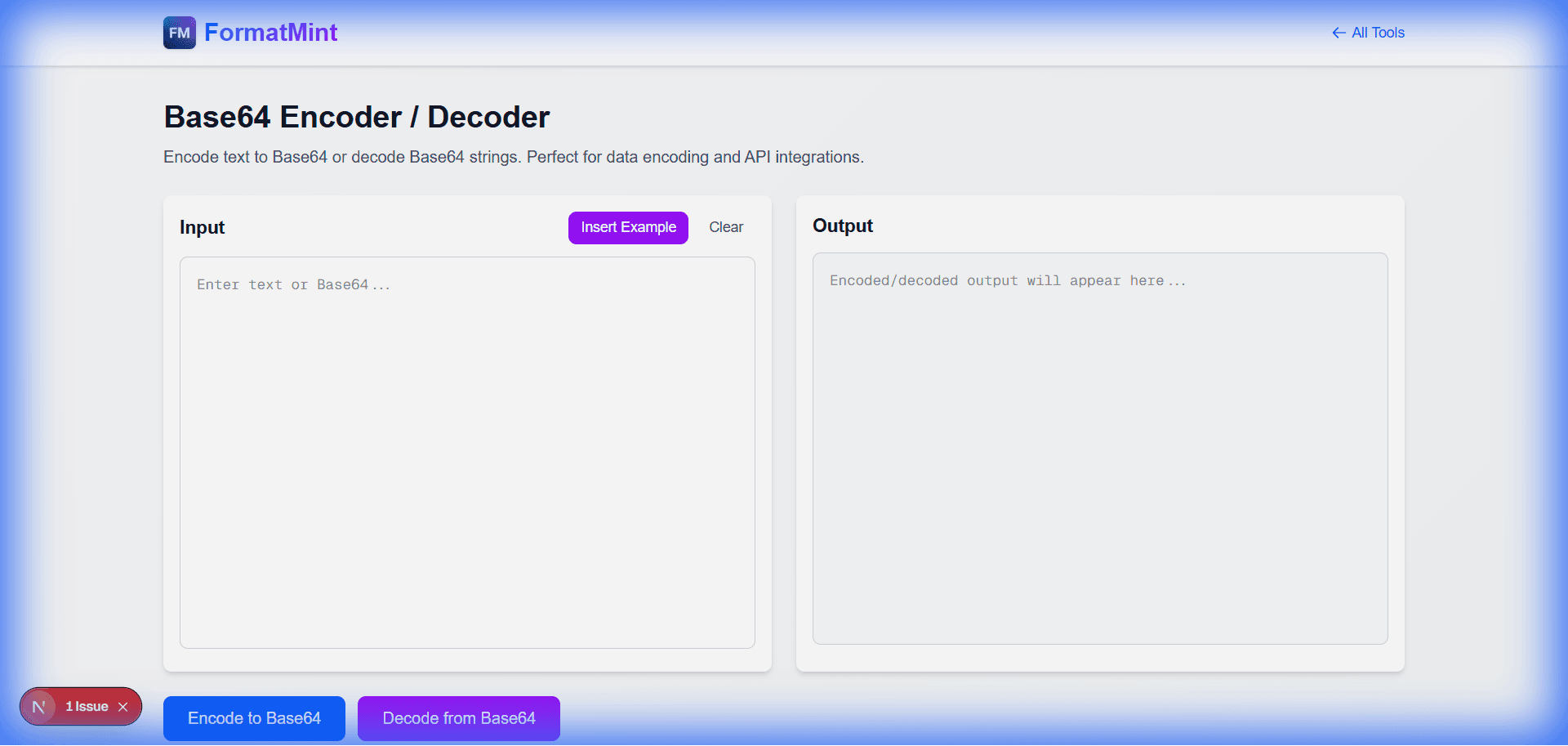
Our Base64 Encoder/Decoder lets you translate between plain text and this ubiquitous encoding format instantly.
Why Does This Exist?
Base64 solves a very specific problem: Sending binary data through systems that only understand text.
Email is the classic example. Email protocols were originally designed to handle only plain text. So, if you wanted to attach an image (binary data) to an email, the system would choke.
Base64 takes that binary image data and translates it into a safe set of 64 characters (A-Z, a-z, 0-9, +, /) that can travel safely through any text-based system.
Developer Use Cases
1. Debugging JWTs
If you work with modern authentication, you use JSON Web Tokens. A JWT is just three Base64 strings joined by dots. You can paste the payload part of a JWT into our Decoder to see exactly what data is inside (like user ID or expiration time) without needing a specialized tool.
2. Basic Auth Headers
Ever seen an HTTP header like this?
Authorization: Basic dXNlcm5hbWU6cGFzc3dvcmQ=
That gibberish is just username:password encoded in Base64. It's not encryption (it's easily reversible!), but it's the standard way to send credentials in the HTTP Basic Auth protocol.
3. Data URIs
You can embed small images directly into your HTML or CSS to save an HTTP request. (We have a dedicated Image to Base64 Tool for this).
background-image: url('data:image/png;base64,iVBORw0KGgoAAAANS...');
This is great for small icons or placeholders.
Common Confusion: Encoding vs Encryption
Base64 is NOT encryption.
I repeat: Base64 is NOT encryption.
Do not use Base64 to "hide" secrets. Anyone can decode it. It's like writing a message in Morse code—it's not secret, it's just a different representation. Use it for transport compatibility, not security.
Related Tools
Base64 Encoder / Decoder
Encode text to Base64 or decode Base64 strings. Perfect for data encoding and API integrations.
URL Encoder / Decoder
Encode or decode URLs and query strings. Convert special characters for safe URL transmission.
Image → Base64 Converter
Convert images to Base64 strings. Perfect for embedding images in HTML, CSS, or JSON.